
The most common mistakes businesses make with photos
A potential customer will often form an impression of your business before reading a single word. That impression comes from your photos.
For restaurants, property listings, and service-based businesses, visuals are not just supporting content. They are often the first contact someone has with your brand, shaping how professional, trustworthy, and appealing your business feels.
This article is written for business owners and managers who rely on visual content to attract customers. It explores the most common mistakes businesses make with photos, not from a purely aesthetic perspective, but from a marketing one, where every image should support how your business is perceived and chosen.
Focusing only on aesthetics instead of purpose
Many businesses think a “beautiful photo” is enough. But if the image does not communicate something useful, it is not doing its job.
For example, a restaurant might have artistic close-ups of dishes, but no clear images of portion size, menu variety, or the venue itself. A property listing might look stylish but fail to show layout or flow. As your brand philosophy suggests, visuals should be both beautiful and purposeful. When purpose is missing, the photo becomes decoration instead of a business tool.
Using low-quality or inconsistent images
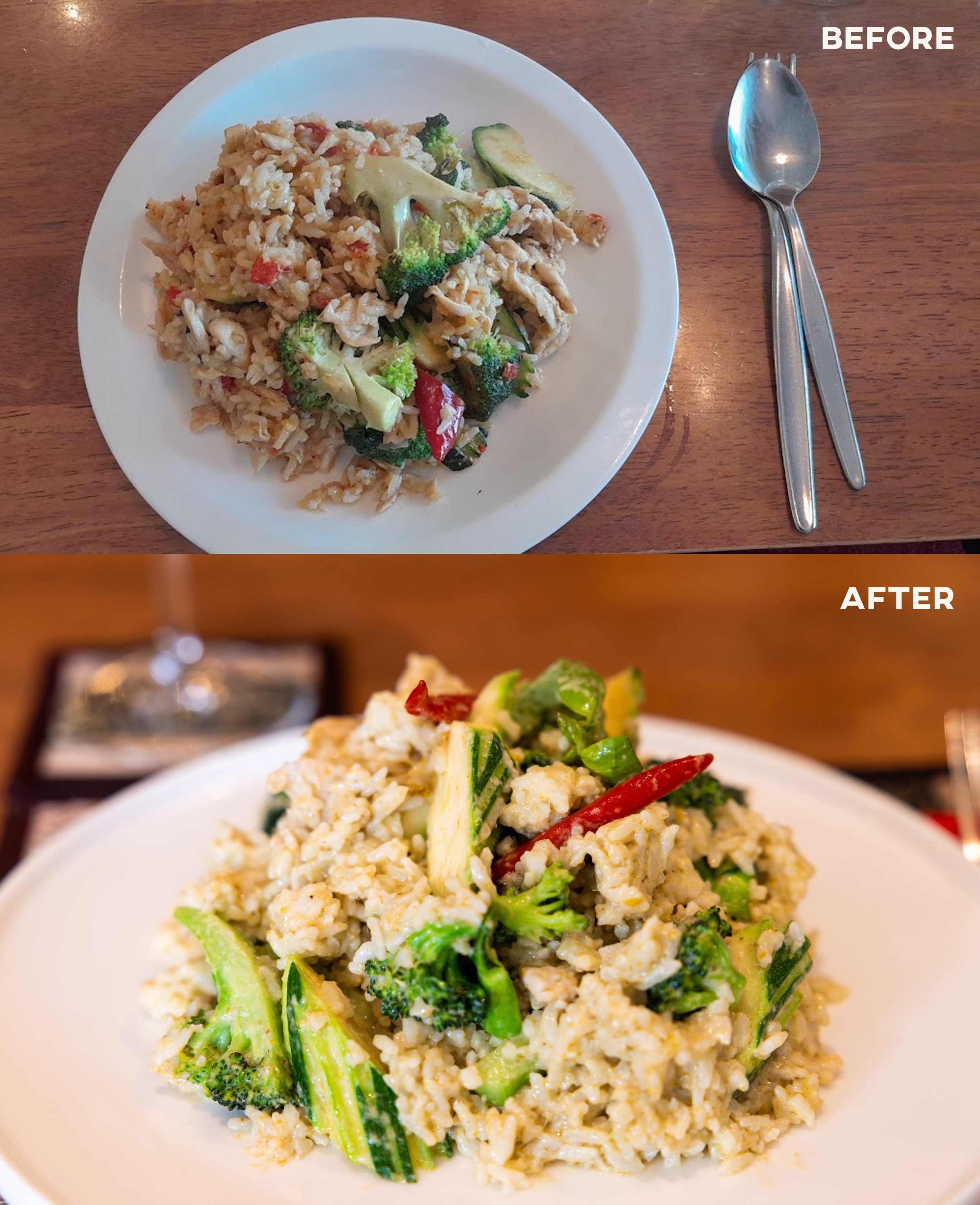
One of the most common mistakes is relying on a mix of phone photos, outdated images, and inconsistent editing styles across different platforms. And when businesses end up using too many stock images, consistency becomes even more difficult. To learn more about the contrast between stock images and authentic brand images, have a look at this article.
This creates a fragmented and confusing impression. A potential customer might discover the business through a strong image on Instagram, but then see poorly lit or amateur-looking photos on the website or Google profile. That inconsistency quietly erodes trust. Strong visuals are not just about looking good; they signal professionalism, attention to detail, and reliability.
Poor lighting and colour accuracy
Lighting is one of the strongest signals of quality, yet it is often overlooked. Dark interiors, harsh shadows, mixed lighting, or incorrect colour tones can make a space feel uninviting or misleading. For example, a warm and cosy café might appear cold and dull if the colours are off. A property might feel smaller or less appealing simply because of poor lighting. These details may seem subtle, but they have a strong psychological impact on how a business is perceived.
Not showing the full experience
Another common mistake is presenting isolated elements instead of the complete experience. Restaurants often show only dishes, but not the atmosphere, seating, or staff. Accommodation providers show rooms but not the surroundings or lifestyle. Service businesses show portraits but not the process or environment. People don’t just buy a product or service; they buy the experience of it. When that is missing, the audience struggles to imagine themselves there.
Over-editing or using unrealistic visuals
In an attempt to look “premium,” some businesses go too far with editing. Oversaturated colours, excessive HDR, unrealistic skies, or heavily retouched food can create a false impression. While these images may initially catch attention, they often lead to disappointment when the real experience does not match the visuals. This damages trust, which is far more costly than having slightly less “perfect” images.
Not updating photos regularly
Businesses evolve, but their photos often don’t. Menus change, interiors get updated, branding evolves, and staff changes. Yet many businesses keep using old photos for years. This creates a disconnect between expectation and reality. Even worse, outdated visuals can make a business look neglected or less active than it actually is.
Ignoring composition and framing
Composition is not just an artistic detail; it directly affects clarity and communication. Common issues include cluttered backgrounds, awkward angles, cropped elements, or distracting objects. In property photography, this can make spaces feel smaller or poorly designed. In food photography, it can make dishes look less appealing. Clean, intentional composition helps guide the viewer’s eye and makes the message instantly clear.
Not aligning visuals with the brand
Photos should reflect the identity of the business, but many brands overlook this. A luxury accommodation using casual, inconsistent images, or a modern café using dark and outdated visuals, creates a mismatch. Visuals are one of the fastest ways people understand what a brand stands for. When they are not aligned, the brand feels unclear or weak.
Trying to do everything themselves
Many businesses try to handle their own photography to save money, especially in the beginning. While this is understandable, it often leads to inconsistent results, wasted time, and missed opportunities. Professional visual work is not just about owning a camera; it involves understanding light, composition, storytelling, and most importantly, how visuals influence customer decisions. Poor visuals can quietly cost more in lost conversions than the price of professional photography.
If you are a business based in New Zealand and want to strengthen how your brand is presented visually, you can explore our services here.
Treating photos as a one-time task
Finally, many businesses treat photography as something they “tick off” once and forget. In reality, visual content is part of an ongoing marketing system. New campaigns, seasonal updates, new offerings, and brand evolution all require updated visuals. Businesses that consistently invest in strong imagery build stronger brand recognition, trust, and long-term growth.
Conclusion
Good visuals do more than represent a business. They shape perception, build trust, and influence decisions long before a conversation even begins.
Most of these mistakes are not made out of neglect, but out of a lack of awareness of how powerful visual communication really is. Once you start seeing photos as part of your marketing system, rather than just content, the approach changes entirely.
If you are a New Zealand-based business looking to present your brand more clearly, professionally, and intentionally, you can learn more about our business photography services here.

About the author: Thaíz Lara is the founder of New Hermits. With a background in marketing, photography, and video production, she creates purposeful visuals for businesses and individuals across New Zealand. Her work blends strategy with storytelling, guided by a detail-oriented approach to every place, person, and brand she documents. Learn more about Lara.

Discover the essential types of photos tour operators need to present their experiences clearly, build trust, and increase bookings. From hero images to social proof and activity flow, learn how to guide potential customers from curiosity to confidence.