
What photos every business should add to the website
A website is often the first place where someone encounters your business. Before they read a single sentence, before they understand your offer, they are already forming an impression through your visuals. In a matter of seconds, people decide whether your business feels trustworthy, professional, and worth their time. And most of that decision is not made through words. It is made through images.
Strong visuals do more than make a website look good. They clarify what you offer, reduce uncertainty, and help people imagine themselves working with you. Weak or inconsistent images, on the other hand, create doubt, even if your service is excellent.
If you are building or improving your website, knowing which photos to include can make a significant difference. And if you would rather focus on your business while ensuring your visuals are done professionally, you can explore our services for NZ-based businesses here.
First impression photos
These are the most important images on your entire website. They are usually placed at the top of the homepage or service pages and should immediately communicate what the business does, who it is for, and the level of quality the visitor can expect. Within a few seconds, these images shape perception, and perception often determines whether someone continues browsing or leaves.
A strong hero image feels intentional and clear. It does not confuse or overwhelm. It gives the visitor a sense of confidence and direction. It sets the tone for everything that follows. A weak or generic image, on the other hand, creates doubt and makes the business feel less professional, even if everything else is well done. This is not just a design choice; it is a strategic one.
Product or service photos
These images show exactly what the business offers. They answer a very practical question in the visitor’s mind: what am I actually getting? Without this clarity, people hesitate, because uncertainty creates friction in decision-making.
Good product or service photos are clean, consistent, and accurate. They present the offering in a way that feels both appealing and trustworthy. When visuals are inconsistent or overly edited, they can unintentionally create suspicion. When they are simple, well-composed, and honest, they build confidence. This is where your business proves that its offer is real, tangible, and worth considering.
If your company offers services or experiences instead of products, make sure to learn more about experience photos in this article.
Environment or space photos
People rarely make decisions based only on the product. They also care about the environment in which the experience happens. These photos show the broader context, such as the interior of a venue, the layout of a space, or the surrounding atmosphere.
This type of imagery helps the visitor imagine themselves there. It answers questions they may not even consciously ask, such as whether the space feels comfortable, premium, welcoming, or aligned with their expectations. When done well, these images create a sense of familiarity before the person even arrives. They transform an abstract idea into something that feels real and accessible.
Human presence photos
Even in businesses that are not centred around people, human presence plays a key role in building trust. Seeing real individuals behind the brand makes the experience feel more personal and less transactional.
These photos can include team members, the founder, or staff in action. They show who is behind the service and subtly communicate professionalism, care, and reliability. When visitors can see the people involved, they feel more at ease, because they are no longer interacting with an abstract brand but with real individuals. This connection, even if subtle, can influence the decision to reach out.
Storytelling photos
Lifestyle images go beyond showing what something is and instead show what it feels like. They place the product or service within a real-life context, allowing the viewer to emotionally connect with the experience.
For example, instead of only showing a dish, a lifestyle image might show someone enjoying it. Instead of just displaying a room, it might show a guest relaxing in that space. These images help answer a deeper question: how will this fit into my life? This is often where desire is created, because people begin to imagine themselves in that moment. And once someone can imagine it, the decision becomes much easier.
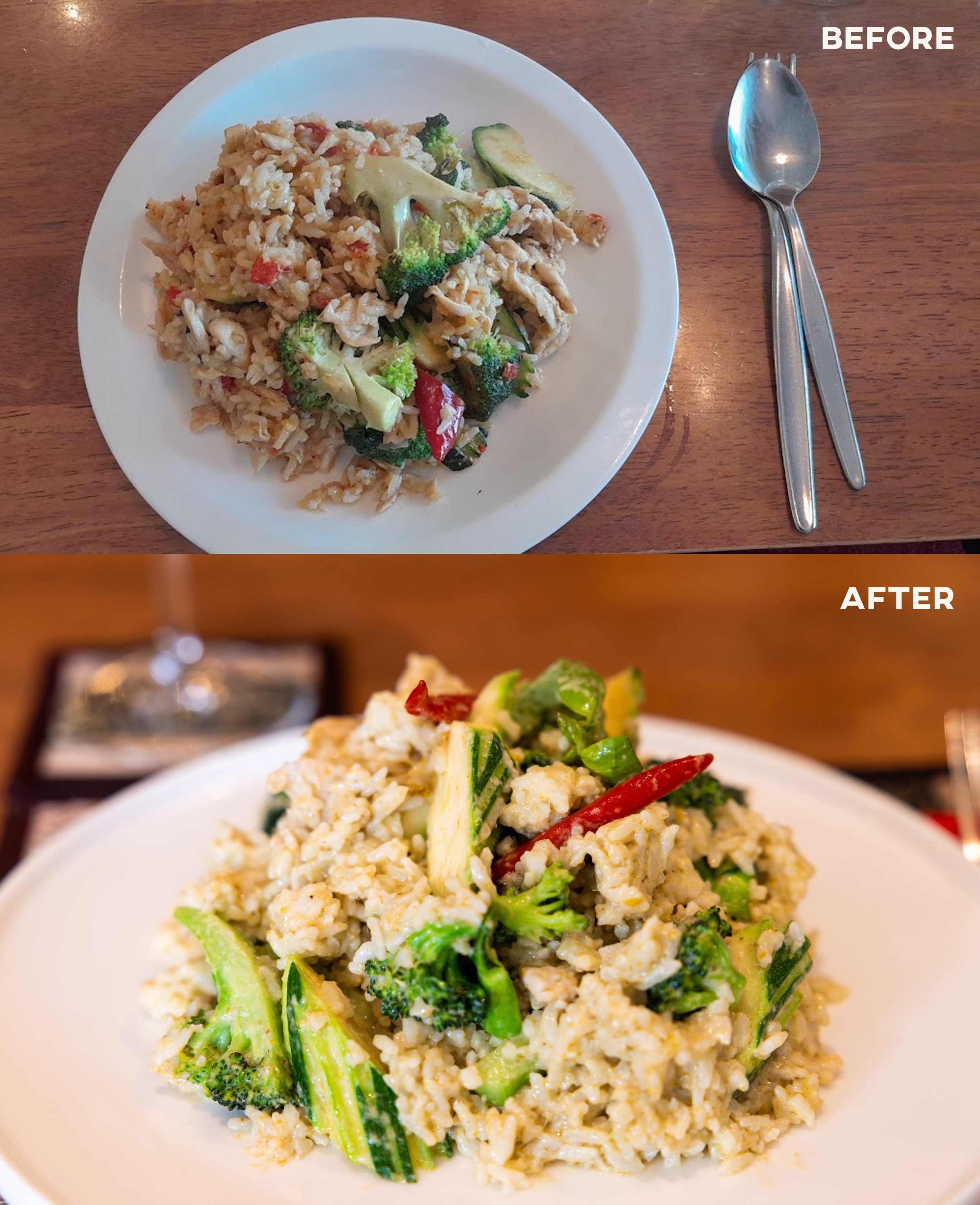
Before-and-after or transformation photos
When a business provides a transformation, these images become extremely powerful. They visually demonstrate the change that the service can create, making the value immediately clear.
Rather than relying on explanation, they allow the visitor to see the result with their own eyes. This reduces skepticism and builds confidence, because the outcome is no longer abstract. It becomes something concrete and proven. In many cases, these images are more persuasive than any written description.
Social proof visuals
Trust is rarely built in isolation. People want to know that others have already chosen and trusted the business. Visual social proof strengthens this reassurance in a more immediate and impactful way than text alone.
This can include images of real clients, busy environments, or moments that suggest popularity and credibility. When visitors can see that others have engaged with the business, it reduces hesitation and makes the decision feel safer. It shifts the question from “should I trust this?” to “others already do.”
Behind-the-scenes (used selectively)
Behind-the-scenes images can add depth by showing how things are created or delivered. They give a glimpse into the process and can reinforce professionalism and effort.
However, they should be used carefully. The focus of a business website should remain on the final result and the value delivered. Behind-the-scenes content works best when it supports that message, rather than distracting from it. When used with intention, it can strengthen credibility. When overused, it can dilute the impact of your main visuals.
Conclusion
A strong website is not built only with words. It is built with visuals that guide the visitor, answer their questions, and help them feel confident in their decision. Each image should have a purpose. It should either build trust, clarify your offer, show quality, or help the visitor imagine the experience. When your visuals are aligned with these goals, your website becomes not just informative, but persuasive.
And if you want to ensure your business is presented with clarity, professionalism, and intention, you can explore our business photography services for NZ-based businesses here.

About the author: Thaíz Lara is the founder of New Hermits. With a background in marketing, photography, and video production, she creates purposeful visuals for businesses and individuals across New Zealand. Her work blends strategy with storytelling, guided by a detail-oriented approach to every place, person, and brand she documents. Learn more about Lara.

Discover the essential types of photos tour operators need to present their experiences clearly, build trust, and increase bookings. From hero images to social proof and activity flow, learn how to guide potential customers from curiosity to confidence.