
What makes food photos look appetising
A customer scrolls through dozens of options in seconds. What makes them stop on your restaurant, instead of the one next to it?
If you run a restaurant, café, bakery, or any food venue, this article is for you. Strong food photography directly influences how people perceive your dishes, your brand, and ultimately whether they choose to order from you. In this guide, you will learn what actually makes food photos look appetising, based on how people visually process food. These are practical, proven principles you can apply immediately to improve your images.
And if you read this and realise you would rather focus on your business while a professional handles the visuals, you can explore our food photography services in New Zealand here.
Use directional natural light
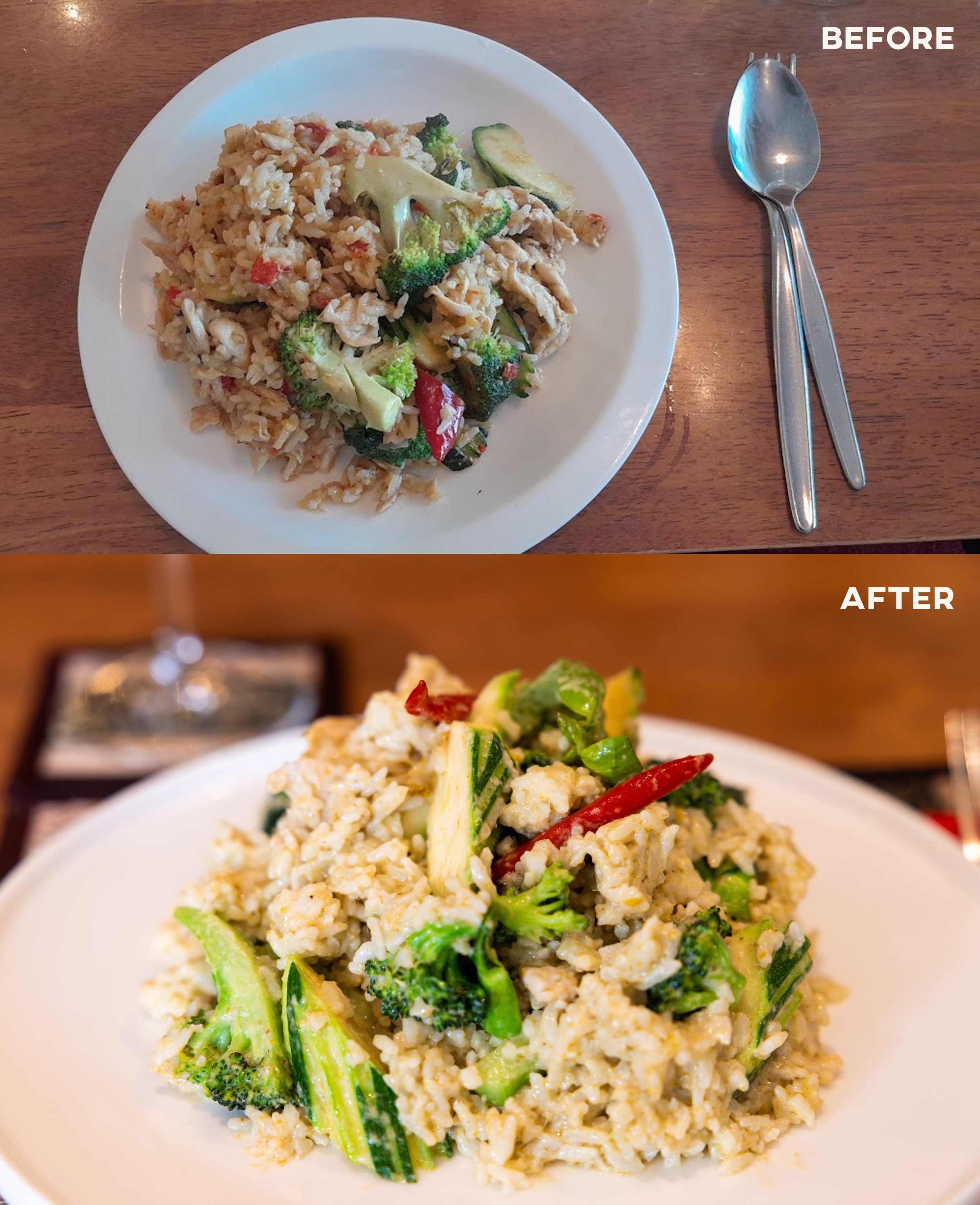
This is the most important factor. Side or back lighting enhances texture and depth, which makes food look fresher and more real. Soft natural light from a window is ideal. Avoid harsh overhead lighting, as it flattens the image and reduces appeal.
Highlight texture deliberately
Our brains associate texture with taste. Crispy edges, glossy sauces, steam, and layers all signal flavour. Use light and angle to emphasise these details. Slight imperfections often make food look more real and appetising than perfectly smooth surfaces.
Prioritise colour contrast
Colour plays a strong role in appetite perception. Dishes with contrast (for example, green herbs on warm-toned food) are perceived as more fresh and flavourful. Avoid overly dull or monotone compositions unless intentionally styled.
Keep compositions simple
Too many elements create confusion and reduce focus. The viewer should instantly understand what the hero dish is. Use minimal props and clean backgrounds so the food stands out clearly.
Shoot at the right angle for the dish
Different foods look better from different perspectives. Flat foods like pizza or pancakes work well from above. Tall items like burgers or drinks benefit from a side angle. Choosing the right angle helps communicate structure and volume.
Make the food look fresh, not staged
Freshness cues are powerful. Steam, condensation, melting elements, or a freshly cut surface signal that the food is ready to eat. Over-styled food often looks artificial and less appealing. To learn all about preparing dishes for these types of photoshoots, have a look at this article.
Control styling and plating
Small adjustments make a big difference. Clean plate edges, intentional placement, and slight asymmetry create a more natural and refined look. Avoid overcrowding the plate.
Use shallow depth of field
A blurred background helps isolate the subject and directs attention to the food. This mimics how we naturally focus when looking at a dish in real life and makes the image feel more immersive.
Include context, but carefully
Showing part of the environment (table, hands, utensils) can make the image feel more real and relatable. However, it should support the story, not distract from the food.
Edit to enhance, not to transform
Adjust brightness, contrast, and colour to match how the food looked in real life. Over-editing can make food look unnatural, which reduces trust and perceived quality.
Conclusion
Appetising food photography is not accidental. It is built through attention to detail, and an understanding of how people perceive food visually. When done well, your photos do more than showcase a dish. They create desire, communicate quality, and position your brand as something worth choosing.
If you want your food visuals to consistently attract attention and drive more orders, working with a professional can make a significant difference. If you are based in New Zealand and want to elevate how your food is presented online, you can explore our services here.

About the author: Thaíz Lara is the founder of New Hermits. With a background in marketing, photography, and video production, she creates purposeful visuals for businesses and individuals across New Zealand. Her work blends strategy with storytelling, guided by a detail-oriented approach to every place, person, and brand she documents. Learn more about Lara.

Discover the essential types of photos tour operators need to present their experiences clearly, build trust, and increase bookings. From hero images to social proof and activity flow, learn how to guide potential customers from curiosity to confidence.